Showing posts with label pasta. Show all posts

Wednesday, September 8, 2010

For the End of Summer

Hand Cut Pasta with Basil Pesto, Green Beans and Potatoes
As the curtains close on this summer's stage, I thought it would be appropriate to share my adaption of a classic Italian summer dish.


Green beans and potatoes may seem like an odd addition to pesto and pasta, however they are commonly found in this classic dish that originated in Genova, Italy. The first time I ate this dish was in one of the beautiful towns of La Cinque Terra, on the Linguaria coast of Italy. I was fifteen, at the time, and food was low on my lists of interest. So the fact that over 10 years later I can distinctly remember devouring this pasta, washing it down with an ice cold sprite, while sitting over the cliffs of the Mediterranean sea on a warm summer day, is a testament to how truly wonderful this dish really is. At an age where little impressed me, the rich flavors of this dish certainly left an impression on me.
In the recipe that follows, I cut fresh lasagna sheets by hand, yet any long fresh noodle will be wonderful too. And of course, store-bought linguine or spaghetti will work perfectly too. Just make sure to adjust your cooking time –fresh pasta takes a few minutes unlike dried pasta.
The key for this dish, as usual, is using the best quality ingredients. That means – fresh, fragrant basil; cold pressed extra virgin olive oil, and real Parmigiano-Reggiano cheese. Using anything less in this classic pesto is really just a waste of your time. I also like to use the small haricots verts, green beans, but if you can’t find them (as I couldn’t this time), any type of green bean will do. Creamy white or Yukon potatoes are best. In traditional Pesto Genovese the green beans and potatoes are cut up fairly small and play a lesser role against the pasta and pesto, however in this rendition of the dish, I wanted to serve the vegetable course and pasta all in one, so I went heavy on the green beans and potatoes. You can adjust the amount of vegetables to your own taste.


Hand Cut Pasta with Basil Pesto, Green Beans and Potatoes

Serves 6

1 large bunch fresh basil leaves (about 3 cups)
1/3 cup raw pine nuts, plus more for garnish
1 large clove of garlic, peeled
1/2 teaspoon salt
1/2 teaspoon pepper
2/3 cup extra-virgin olive oil, plus more for serving
3/4 cup of freshly graded Parmesan cheese, plus more for serving
1 pound fresh pasta sheets, cut into strips or fresh pasta noodles
2 cups fresh green beans, trimmed and cut into 1/2 pieces
3-4 small white potatoes, peeled and cut into 1/3 inch cubes


To make the pesto, place the clean basil leaves (stems removed), pine nuts, garlic, salt and pepper in a large food processor. Blend until chopped. With the machine running, pour the olive oil into the small hole on the top of the food processor in a slow and steady stream. When the mixture is smooth and creamy add Parmesan cheese. Pulse until just combined. This mixture should be me made no more than one hour ahead of time or the basil will oxidize and turn black.
Fill both a medium and large pot with water. Bring both to a boil and add a teaspoon of salt to each.
Place the peeled potatoes in the medium pot of water and cook for about 5 minutes; then add the green beans. Cook for another 5 minutes or until both the potatoes and green beans are tender. Test with a fork. Drain the water from the potatoes and green beans, season with a bit of salt and pepper and set aside.
Meanwhile, add the fresh pasta to the large pot of boiling water and cook for about 3 minutes, or until al dente, but cooked through. Place the noodles and 1/2 cup of the pasta cooking water in a large serving bowl or platter. Pour the pesto over the noodles and toss together. If the pesto is still clumpy add another 1/2 cup or so of the pasta water. Gently toss in the warm potatoes and green beans. Serve in individual bowls and garnish with more Parmesan cheese, a drizzle of olive oil and a few pine nuts, if desired.

Wednesday, August 4, 2010

In Season - Tomatoes and Basil

Summer is the season for the classic combination of tomatoes and basil. Here is a quick guide and a few recipes showcasing this fantastic duo.

Tomatoes and Basil with Fresh Burrata Cheese,
Sea Salt, Fresh Ground Pepper and Extra Virgin Olive Oil

About...


Tomatoes

How to buy: Tomatoes, which are a fruit not a vegetable, come in all shapes and sizes, which is totally irrelevant when it comes to having the best flavor. Look for unbruised and unblemished tomatoes that are vibrant in color, fragrant in smell and have a soft skin. The best tomatoes are ripened on the vine and are therefore not terribly firm at the time of sale. Nor should the tomatoes be sold too soft and overly ripe. The best time to buy tomatoes is towards the end of summer, when they are in the peak of their season. Though there are many varieties grown year round, out of season tomatoes are typically grown in a greenhouse, picked green, and ripened with ethylene on their way to the grocery store. Quite oppositely, heirloom tomatoes are grown from seed that have produced the same variety of tomatoes for many generations, without genetic modification.

Types and Uses: Beefsteak tomatoes are large and typically used for sandwiches and salads. Plum (or Roma) tomatoes are often used in cooking and are canned for tomato sauces. Heirlooms come in a variety of colors and sizes and are best to eaten raw and without too many competing flavors. Cherry and Grape tomatoes are small in size, and have a sweet flavor that can be incorporated into a variety of dishes.

How to Store: Keep tomatoes flat (never stacked on one another) on a plate, out on the kitchen counter. Tomatoes should never be refrigerated.

How to Chop: Depending on the size of the tomato use a very sharp chef's knife, pairing knife or medium size serrated knife. The type of knife one uses is not important, but rather using a sharp knife is, as to not bruise the skin and put pressure on tomato flesh. When working with medium to large tomatoes, begin by cutting the tomato in half; then place the tomato in your non dominate hand and use the knife to cut out the stem and rough part of the core. Depending on what you are using the tomato for, either cut the tomato into wedges or into slices to be diced. Cherry and Grape tomatoes need only to be cut in half or quarters.


Basil

How to buy: Use your nose first - if it doesn't smell like much then it certainly won't taste like much. Look for vibrant green leafs that are minimally bruised.

How to store: If you plan to use your basil the day you purchase it, place it in a small glass of water, like a bouquet of flowers, allowing only the stems to touch the water. You can also wrap the basil in a moist towel or paper towel and store in the refrigerator, but often the leaves will turn black. Depending on the variety of basil that you buy, it will keep anywhere from 1 to 4 days. I have found that farm stand basil rarely lasts more than 24 hours before turning black, but the supermarket varieties tend to last 3 or 4 days. (Makes you think ?)

How to chop: The best time to chop basil is at the last minute during the preparation of your dish, since it tends to bruise and blacken immediately. Remove the basil leafs from its stem and place 5-6 leafs in a stack, with the largest leaf on the bottom. Use the large bottom leaf to roll the basil tightly lengthwise, then chop as thin as desired. Chopping basil in this manner is efficient, prevents bruising and provides and even cut.


Tomato Basil Bruschetta

Making perfect bruschetta:

1. Toast rustic European style bread just enough so it is crispy on the outside but still a bit chewy on the inside.
2. Use farm stand produce, starting with ripe, but slightly firm tomatoes and fragrant basil, both at their peak in the middle and end of summer. Use whatever type of tomato that you prefer, as long as it is a favorable one. You may also choose to remove the center core and seeds, especially if the core is tough and white.
3. Add just a pinch of sugar. This is a tip I picked up in Rossana’s kitchen, not to cover up poor quality produce, but to balance the acidity of the tomatoes.
4. Drizzle pungent extra virgin olive oil atop the bruschetta just before serving. With so few ingredients, quality is first priority, and here is the right occasion to pull out your cold pressed extra virgin olive oil. Add the olive oil, as well as the tomato basil mixture, upon the toasted bread at the last minute will prevent this classic appetizer from turning soggy.

Serves 4

4 large 1/3 inch slices of rustic bread, cut in half, or 8 small baguette size slices
1 teaspoon olive oil
1 1b tomatoes (plum, heirloom, cherry), diced into approximately 1/4 inch pieces
1/2 cup loosely packed basil leafs
1 clove garlic, minced
1/2 teaspoon salt
1/4 teaspoon fresh ground pepper
1/4 teaspoon granulated sugar
2-3 tablespoons extra virgin olive oil

To toast the bread, spread the bread slices on a baking sheet and drizzle with the olive oil. Bake in an oven pre-heated to 350 degrees F for about 10 minutes, flipping the bread slices half way through baking. Or toast the bread in a regular toaster and omit the drizzle of olive oil; Or heat the olive oil in medium sauté or grill pan and cook the toasts a few minutes on each side until slightly golden. (The cooking method is up to you – the goal is merely toasted bread.) Allow the bread to cool on a rack, then place on a plate or platter.
In a medium size bowl add the diced tomatoes. To cut the basil, place the leaves in a small stack (about 6 leaves at a time) and roll up tightly and roughly chop. Add to the tomatoes along with the garlic, salt, pepper and sugar. Gently toss together and taste for more salt and pepper. Evenly distribute the tomato basil mixture atop the toasted bread slices. Drizzle with the extra virgin olive oil. Serve immediately.


Warm Bulgur Wheat with Tomatoes and Basil
Bulgur Wheat is tender and mild, and the perfect grain for this dish. However, I have also used brown rice, cous cous and quinoa with equally satisfying results. I imagine that many different types of grain will work well in this dish, though the cooking time and method for each specific grain will vary.

Serves 4

Ingredients

1 1/2 cups water
3/4 cup bulgur wheat, rinsed
1 teaspoon salt
1/2 teaspoon fresh ground pepper
3 cloves garlic, sliced
1 teaspoon lemon juice
1 teaspoon red wine vinegar
1 1/2 tablespoons extra virgin olive oil
2 medium tomatoes, cut into 1/3 inch slices
1 cup cherry tomatoes, cut in half
1/2 cup (loosely-packed) fresh basil, roughly chopped

Bring the water to a boil in a medium size saucepan. Add the bulgur wheat, cover and remove from the heat. Allow the bulgur wheat to sit with a lid for 20-25 minutes, or until most of the liquid is absorbed.
Meanwhile, combine the salt, fresh ground pepper, garlic, lemon juice and red wine vinegar in a small bowl. While whisking, add the extra virgin olive oil.
When the bulgur wheat is tender, drain any excess liquid and place in a large serving bowl. Add the dressing, tomatoes and basil and gently toss together. Taste for more salt and pepper. Serve warm or at room temperature.


Tomato Basil Capellini
Capellini means little hairs in Italian, and that is exactly what this pasta is; extra thin hair-like strands. This pasta is best served with very light sauces since it tends to clump together. A heavy tomato sauce will drown capellini, unlike fresh uncooked tomato sauces, such as this one, that contain more moisture (water). Chop the tomatoes for this sauce ideally one hour in advance and season with salt to help draw out the moisture in the tomatoes. Salt, along with the other basic seasonings, brings out the delicate flavors of this simple summer dish.

Serves 6

Ingredients

15 ripe Roma tomatoes (about 3 pounds)
1 teaspoon salt
1/2 teaspoon pepper
1 teaspoons of sugar
1 large clove of garlic, minced
1 cup loosely packed basil leafs
1 pound capellini or angel hair pasta
1/3 cup good quality extra virgin olive oil
1/4 cup freshly grated Parmesan cheese (optional)

Bring a large pot of water to a boil.
Meanwhile, cut the tomatoes in half and remove the core of the tomatoes and discard; then chop the tomatoes and place in a large serving bowl. Add the salt, pepper, sugar, and garlic. (I use a garlic press to mince the garlic.) Toss all the ingredients together. Let this mixture stand at least 10 minutes or up to 2 hours at room temperature to allow the flavors to absorb and the water to extract from the tomatoes to help create the sauce. Chop the basil and add to the tomatoes at the last minute, otherwise the basil will start to turn black.
When the water comes to a boil cook add a tablespoon of salt and the pasta, and cook following the directions on its package until al dente, about 2 minutes. Careful; this pasta cooks quickly. Drain the pasta and immediately add to the serving bowl with the tomatoes. Gently toss the pasta into the tomato mixture. Drizzle the olive oil over the pasta. Garnish the pasta with a bit of Parmesan cheese, if desired. This pasta is wonderful warm or at room temperature.

In Need of More Tomato Basil Recipes? Check out:
Baby Arugula Salad with Roasted Veggies and Fresh Burrata Cheese - Aug. 7. 09
Audrey Hepburn's Favorite Pasta - Dec. 6. 09
or add a basil to:
Tomato Crisp - Sep. 1. 09
Spinach, Quinoa and White Cheddar Bake - Jan. 10. 10
Creamy Tomato Soup Jan. 18. 10

Thursday, April 15, 2010

Spring Vegetable Lasagna


Spring Vegetable Lasagna
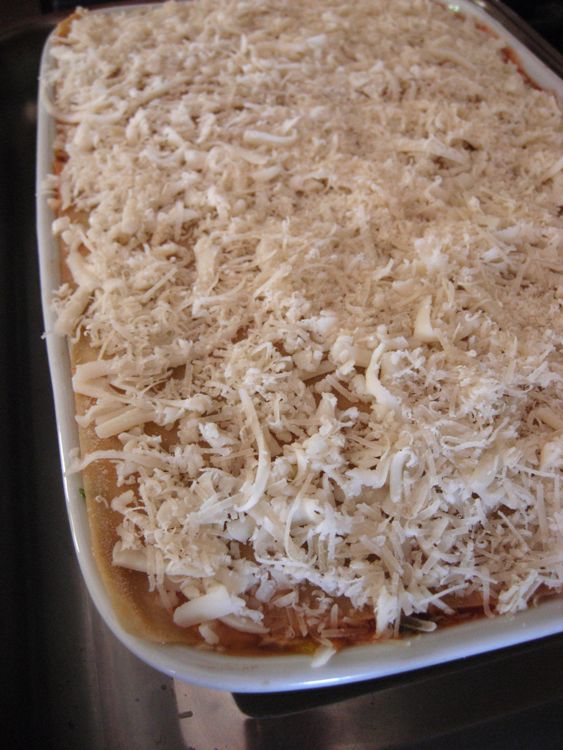
I layer fresh pasta noodles, lots of fresh Spring vegetables, Italy's three favorite cheeses - ricotta, mozzarella and Parmesan with just a bit of my Simple Tomato Sauce (recipe follows) for a hearty lasagna that is a treat to have without being overly decadent.

Serves 8

Ingredients

- 1 bunch (about 6 cups) fresh baby spinach, washed well, roughly chopped
- 1/4 cup olive oil
- 1 large leek, diced
- 1 bunch spring onions or 1/2 white onion, diced
- 10 medium size asparagus, cut at an angle into 1/2 inch pieces
- 1 cup artichokes hearts
(fresh, frozen and thawed, or canned and rinsed), cut into 1/2 inch pieces
- 1/2 cup fresh grated Parmesan cheese, plus more for the top
- 16 ounces whole milk ricotta cheese
- 2 recipes of Simple Tomato Sauce
- 12 sheets fresh lasagna noodles (you may substitute boiled lasagna noodles)
- 16 ounces mozzarella cheese, grated
- salt
- fresh ground pepper

Place the spinach in a large pot and cook over medium heat with a lid until wilted, stirring occasionally. Remove the spinach from the pot and place in a colander to remove the excess water. Drain any water from the pot and then heat the olive oil in the pot over medium/low heat. Add the leek and onion, season with salt and cook, stirring occasionally, until caramelized, about 25 minutes. Season with salt and pepper, add the asparagus and artichoke hearts and cook over medium heat for 2 minutes. Reduce the heat to low and add the drained spinach. Remove the pot from the heat and set aside.
In a medium bowl combine the Parmesan cheese, ricotta cheese, 1/4 teaspoon of salt and a pinch of fresh ground pepper. Set aside.
To assemble the lasagna, spoon about a 1/4 cup of the Simple Tomato Sauce into the bottom of a 13 by 9 inch casserole dish. Place down a layer of the lasagna noodles. Top the lasagna noodles with approximately 1/2 cup of the ricotta cheese mixture, then add a third of the vegetable mixture and about 1/2 cup of mozzarella. Top the mozzarella with approximately 1/2 cup of tomato sauce. Then top with another layer of the lasagna noodles and repeat the same process; the ricotta mixture, the veggie mixture, the mozzarella cheese and the tomato sauce; then the lasagna noodles, ricotta mixture, veggie mixture, mozzarella cheese and tomato sauce. Top with a final layer of lasagna noodles, 1/2 cup of mozzarella, and a few tablespoons or so of Parmesan cheese. Bake the casserole at 375 degrees F on a lined baking sheet for about 40 minutes, or until the top is brown and the sides are bubbling. Let sit 5 minutes before serving.


Simple Tomato Sauce
This tomato sauce is extremely fast to make, and is perfect for this lasagna. I make this sauce for dishes in which I do not want the flavors of a tomato sauce to overpower the dish. I like this sauce tossed with pasta, however it may be a bit too basic for your taste. This simple sauce is perfect with cannellini beans, sautéed and roasted vegetables and makes a great pizza sauce.

Makes 3 cups

Ingredients

- 1/3 cup olive oil
- 2/3 cup diced white onion (about 1/2 an onion)
- 1 large clove garlic, chopped
- 2 teaspoons salt
- 1 teaspoon pepper
- 1 large can (28 ounces) chopped tomatoes
- 1/2 teaspoon sugar

Heat the olive oil in a medium size saucepan on medium heat. Add the chopped onion and cook for about 5 minutes, until translucent. Add the garlic and cook 1 minute more. Add the can of chopped tomatoes and their juice to the pot and stir together. Season the tomatoes with 2 teaspoons of salt and 1 teaspoon of pepper. Bring the mixture to a slight boil and reduce to a simmer with a tight fitting lid. Let the sauce simmer for about 20 minutes. Turn off heat and add the sugar. Use a hand blender (or food processor) to purée the mixture, leaving some of the tomato chunks. Taste for more salt and pepper.

Tuesday, January 26, 2010

Whole Wheat Pasta

It seems that practically overnight boxes of pasta made from all sorts of exotic grains (spelt, quinoa, rice, millet) have quickly cluttered the shelves in the pasta aisle. I imagine it will stay that way until the "gluten free" craze fades away. Seeing new interesting products on the shelves is exciting to me and definitely worth a try or two, even if I’m not gluten intolerant. Well, after a few tries (and it only took a few) I have concluded that taking away the gluten in pasta is like taking away the love in a marriage. A marriage without love is unpleasant and will ultimately break down and fall apart – likewise – pasta without gluten is pretty unpleasant too, and will also break down and fall apart. If you have ever made gluten free pasta, then you know what I am talking about.
Gluten is formed by the proteins present in wheat flour and develops with water when agitated. Gluten is the elasticity and extensibility essential to making breads and so many baked goods. It is what makes pasta so chewy and delicious. Since gluten is naturally formed by the protein in wheat products, flours that contain more protein develop gluten more easily, which is why one uses bread flour (which has a protein content of 11-13%) when they want a to develop the gluten for a chewy bread product, or uses cake flour (which has a protein content of 6-9%) when they don’t want to develop the glutens for a delicate cake and tender crumb. Traditional pasta is made from semolina, which comes from durum flour, which is milled from the endosperm of the durum wheat kernel. The endosperm makes up 83% of the total wheat kernel and has the largest amount of protein and starch. The rest of the wheat kernel is composed of the bran (14.5%), which contains the majority of the fiber and the germ (2.5 %), which contains the majority of the nutrients. This may be more information than you wanted to know about wheat, but what I am trying to make clear is that durum flour is made from the part of the wheat kernel devoid of the bran (fiber) and germ (nutrients) because it is the starch and protein from the endosperm that is so crucial to the development of gluten, which is essential to that wonderful chewy texture of traditional semolina pasta. Grains such as quinoa, rice, oats and spelt contain little or no gluten and therefore are biologically incapable of developing the elasticity and texture of any wheat product. It is the strands of gluten that hold everything together, which is why gluten free pastas fall apart.
Now, if you have to, or choose to eat a gluten free diet for health and dietary purposes that is one thing, but if you are like me and merely interested in trying out healthier pasta alternatives (remember durum pasta was stripped of much of its fiber and nutrients), I suggest opening a box of whole wheat pasta. Unlike durum flour, which is milled from only the endosperm of the wheat kernel, whole wheat flour is milled from the entire wheat kernel and therefore contains a higher amount of fiber, nutrients and protein. Whole wheat is not always used in pasta and other baked goods because it has a shorter shelf life, but mainly because it has a distinct flavor that is not always desired in the finished product. (Imagine eating a whole wheat cupcake under a cloud of chocolate buttercream – yuck!) However, there are many occasions where the nutty flavor of whole wheat is very appropriate and very welcomed. Pasta is one of those occasions. Whole wheat pasta has a distinct flavor that I find tastes best when brightened with complimenting ingredients rather than covered up with a heavy sauce. Whole wheat pasta does not contain as much gluten as semolina durum pasta, but has enough gluten that it will not completely fall apart. Though I have been arguing hard for the glories of gluten I also like to eat a diet high in fiber and nutrients and very often all of those tasty gluteny treats (cupcakes, bread, pizza and pasta) aren’t the most health conscious choice. When it comes to pasta I have found that whole wheat has just the right balance – it is healthy and nutritious yet won’t totally fall apart on me.
So without further ado, here are three whole wheat spaghetti dishes (my favorite whole wheat noodle) that boasts the wonderful and distinct flavor of whole wheat pasta.

Whole Wheat Spaghetti with Almond Parsley Pesto, Lemon
and Pecorino
Whole Wheat Spaghetti with Spinach and Ricotta
Whole Wheat Spaghetti with Kale, Rainbow Chard, Fennel
and Pine Nuts


Whole Wheat Spaghetti with Almond Parsley Pesto, Lemon and Pecorino
Whole wheat pasta is a perfect choice for this robust pesto.


Serves 6

Ingredients

- 3 cups flat leaf parsley, stems removed
- 1/2 cup raw sliced almonds
- 1 clove of garlic
- 1/2 teaspoon salt
- 1/2 teaspoon fresh ground pepper
- pinch red pepper flakes
- 1/2 extra virgin olive oil, plus more for garnish
- 1 cup grated Parmesan cheese
- 1/3 cup grated Pecorino cheese, plus more for garnish
- 1 teaspoon lemon zest
- 1/3 cup lemon juice
- 1 pound whole wheat spaghetti

To make the pesto, place the parsley, almonds, garlic, salt, pepper and red pepper flakes in a food processor. Pulse until the ingredients are finely chopped. With the machine running, pour the olive oil into the food processor in a slow and steady stream. When the mixture is smooth and creamy add the Parmesan cheese, Pecorino cheese, lemon zest and lemon juice. Pulse a few more times, until just combined. This mixture can be made up to a day ahead of time, but cover the top of the pesto with plastic wrap to prevent it from turning brown.
To make the pasta, bring a large pot of salted water to a boil. Cook the pasta until tender, according to the package instructions. (I do not cook whole wheat pasta al dente or it is chalky and dry in the middle.) When the pasta done, drain and transfer into a large serving bowl. Toss the pesto into the warm pasta and drizzle over more extra virgin olive oil and garnish with the Pecorino cheese shavings. Serve warm or at room temperature.

Whole Wheat Spaghetti with Spinach and Ricotta
The flavors of this dish were inspired from my favorite pizza toppings from a pizzeria located just across the street from the school I attended in Florence, Italy. Though there pizza was delicious, it was the spinach and ricotta on top of the pizza that I couldn’t get enough of. I make this dish over and over again because it makes a truly satisfying complete meal – wholesome wheat pasta, slightly caramelized onions and lots of dark spinach greens makes this dish hearty and filling, while creamy ricotta cheese brings out decadence that is balance out with earthy pine nuts and subtle kick from red pepper flakes. Plus, I can prepare everything for this dish in the time it takes for the pasta water to come to a boil.


Serves 6

Ingredients

- 1 1/2 cups ricotta cheese
- zest of 1 lemon
- 3 tablespoons olive oil
- 1/4 teaspoon salt
- 1/4 teaspoon pepper
- 1 medium white onion, sliced
- 2 shallots, diced
- 4 cloves garlic, diced
- 1/2 teaspoon red pepper flakes
- 1 pound whole wheat spaghetti
- 1 pound baby spinach, washed
- 1/3 cup pine nuts
- 3 tablespoons extra virgin olive oil
- 1/2 cup freshly graded Parmesan cheese

Bring a large pot of salted water to a boil. In a large serving dish, toss together the ricotta cheese and the lemon zest. Set aside.
In another medium/large pot heat the 3 tablespoons of olive oil on medium heat. Add the onion, shallots, garlic and season with salt and pepper. Sauté the mixture on medium/low heat until soft, about 5 minutes. Stir in the red pepper flakes. Meanwhile, when the salted water comes to a boil, add the whole wheat spaghetti and cook until tender according to the directions on the package. Once the onions are soft, translucent and a bit caramelized, add 1/3 of the spinach and toss together with the onions. When the spinach has cooked down add another 1/3 of the spinach. Let that cook down, and add the last 1/3 of the spinach. When the pasta is tender add the pasta to the large serving dish with the ricotta cheese mixture. Add the spinach and onion mixture, pine nuts, extra virgin olive oil and Parmesan cheese to the pasta; Toss everything together and serve warm.

Whole Wheat Spaghetti with Kale, Rainbow Chard,
Fennel and Pine Nuts

This simple pasta dish, full of nutrient rich ingredients, is a vegan spin off from my Whole Wheat Spaghetti with Spinach and Ricotta. Certainly you can add a bit of Parmesan cheese to this dish, but it doesn’t really need it. On nights when I want to forgo dairy for whatever the reason I am pleasantly reminded that I don’t need to cover up the flavors of my food, with whether it be cheese, butter, salt or pepper, or else I miss out on the depth of flavors in the real ingredients of the dish. Here sweet fennel and onions contrast well with the slightly bitter greens and allow the nuttiness of the whole wheat pasta to really shine through. This dish is definitely one to make in late fall or winter when you can find fresh extra virgin olive oil, which is typically harvested in late fall. Talk about flavor – fresh olive oil is spicy, fruity and pungent – it is the condiment Italians wait all year for to flavor their favorite dish.


Serves 6

Ingredients

- 1/4 cup olive oil
- 1 medium yellow onion, sliced
- 1 fennel bulb, cut in 1/2 inch pieces
- 1/2 teaspoon red pepper flakes
- 1 pound whole wheat spaghetti
- 1 medium tomato, diced
- 1 bunch Kale (about 10 cups uncooked), washed, chopped
- 1 bunch Rainbow or Red Chard (about 10 cups), washed, chopped
- 3 tablespoons extra virgin olive oil
- 1/3 cup pine nuts
- salt
- fresh ground pepper

Bring a large pot of salted water to a boil. In a large sauté pan heat the 1/4 cup of olive oil on medium heat. Add the onions and fennel and season with salt and pepper. Sauté the mixture on medium heat, stirring occasionally, until the onion and fennel are soft and slightly caramelized, about 10 minutes. Add the red pepper flakes.
Meanwhile, when the salted water comes to a boil, add the whole wheat spaghetti and cook until tender, according to the directions on the package. (Note: whole wheat pasta should not be cooked al dente as you would with semolina pasta. It should be tender and cooked all the way through, and not overcooked and gummy.)
Once the onions are soft, translucent and a bit caramelized, add the diced tomato, and chopped kale and chard. Season with salt and pepper and cover the pot with a lid or stir the greens with a spoon until they are wilted. When the greens are wilted and the pasta is cooked, toss everything together in a large serving bowl. Stir in the pine nuts and drizzle over the extra virgin olive oil. Serve warm.

Sunday, January 3, 2010

American Comfort Food

Sweet Potato Fries
Grandma's Macaroni and Cheese
Roasted Asparagus
Chocolate Bread Pudding with Warm Creme Anglaise


Sweet Potato Fries
Serve with Pommes Frites al Forno Dipping Sauces (September 8, 2009 blog entry).


Serves 4

Ingredients

- 2 large sweet potatoes
- coarse salt
- about 1/4 cup olive oil/vegetable oil

Preheat your oven to 425 degrees F. Cover 2 large sheet pans with parchment paper. Peel the potatoes and immediately place in a large bowl of water. With a sharp knife, cut each potato in half and then into 1/8 of an inch strips. Cut each strip into1/8 inch thick pieces, so that you have long, skinny potato slices. If the potatoes start to turn brown, place them in a large bowl filled with cold water. Place the potatoes on the sheet pans spread evenly apart and toss with oil and salt. After 15 minutes flip the fries using a large metal spatula. Bake until crisp and golden brown, about 30 minutes.

Grandma’s Macaroni and Cheese
I have certainly had (either made or eaten) my fair share of macaroni and cheese, and though I have had some good ones nothing beats my Grandma’s classic recipe. I have had macaroni and cheese with fancy noodles, exotic cheeses, breadcrumb topping, sliced tomatoes, and unnecessary foreign ingredients and still my all time favorite is my Grandma’s well-loved recipe. What makes this macaroni and cheese dish amazing is taking the extra effort to find really good extra sharp cheddar cheese. I suggest opting out of the artificial processed kind by going to a gourmet cheese shop.

Serves 6

Ingredients

- 1 pound elbow pasta, or any medium size macaroni shape noodle
- 1/2 cup extra sharp cheddar cheese, graded
- 1 cup soda cracker crumbs
Cheese Sauce
- 8 tablespoons butter
- 6-8 tablespoons flour
- 4 cup milk (you can use 1%, 2% or whole milk)
- 1 teaspoon salt, plus more for seasoning
- pinch of pepper
- 4 cups ( about 16 ounces) extra sharp cheddar cheese, grated


Bring a large pot of salted water to a boil. Set aside a large casserole dish with a lid, and preheat your oven to 350 degrees F. Meanwhile, melt the butter on low heat in a medium size heavy saucepan. Add just enough flour to the butter to make a paste. Slowly stir in the milk to the paste. Continue to stir and cook over low/medium heat until the sauce has thickened. Add the salt and pepper. Turn the heat off and stir in the cheese until melted. When the salted water has come to a boil cook the pasta 2 minutes less than the package’s cooking instructions call for. (The pasta will finish cooking in the oven.) Drain the pasta and add to the casserole dish, and combine with the cheese sauce. Toss the noodles evenly with the sauce and taste for more salt. Sprinkle the remaining half cup of cheese on top of the macaroni and sprinkle the cracker crumbs on top of the cheese. Bake, with a lid, for 20 minutes. Remove the lid and bake for 10 minutes more. Serve warm.

Roasted Asparagus
If you haven’t had asparagus roasted… well, you should.

Preheat the oven to 400 degrees F. Trim the ends of the asparagus and place on a baking sheet. Toss the asparagus with a bit of olive oil, salt and pepper. Roast in the oven for 20 minutes. Serve immediately.

Chocolate Bread Pudding with Warm Crème Anglaise
This dessert is the epitome of comfort- warm, gooey, chocolaty and covered with vanilla crème anglaise…mmm… Though there is nothing exotic about this dessert, the classic duality of chocolate and vanilla proves itself again. This bread pudding is ridiculously easy to make and goes down pretty easily too, since it is not nearly as rich and indulgent as it looks. It is also surprisingly less sweet than one would expect and therefore needs the balance of the crème anglaise. Enjoy.


Serves 10-12

Ingredients

- butter for baking dish
- 1 pound challah bread, cut into 1/2 cubes
- 4 cups milk
- 8 ounces semisweet chocolate
- 6 large eggs
- 3/4 cup granulated sugar
- pinch of salt
- 1/2 teaspoon vanilla bean extract or vanilla extract
Chocolate Ganache
- 4 ounces semisweet or dark chocolate, finely chopped
- 1 cup cream

Preheat the oven to 350 degrees. Lightly butter a 13 by 9 baking dish. Set aside. Spread the bread cubes out on a large baking sheet and toast in the oven for 15 minutes. Let cool.
In a medium saucepan, heat the milk, butter and vanilla on medium-low heat until warm. Add the chopped chocolate and stir until chocolate has melted. Then add the sugar and let for a few minutes. Meanwhile, in a medium bowl, whisk together the eggs Slowly whisk the eggs into the warm chocolate milk mixture.
Place the cooled toasted bread cubes evenly in a large bowl and evenly pour the custard over the bread cubes. Let the bread cubes absorb the custard for 30 to 45 minutes.
To make the ganache, heat the cream in a small saucepan and bring to a simmer. Pour the hot cream over the chopped chocolate in 3 additions and stir until smooth. Let the ganache cool for 15 minutes.
Transfer half of the soaked bread cubes into the prepared baking dish. Pour over half of the ganache. Top with the remaining breadcrumbs. Pour the remaining ganache over the top. Bake the pudding until it is puffed and does not giggle in the center, when lightly shook, about 55 minutes to 1 hour. Remove the bread pudding from the oven and let sit 10 minutes. Serve warm or at room temperature with Warm Crème Anglaise.

Warm Crème Anglaise

Ingredients

- 1/2 cup whole milk
- 1/2 cup heavy cream
- 3 egg yolks
- 1/2 vanilla bean, or 1 teaspoon vanilla bean paste
- 3 tablespoons sugar

To make the sauce heat the milk, cream and half of the sugar in a medium size heavy saucepan. Cut the vanilla bean lengthwise and use the tip of the knife to scrape all of the seeds into the milk. Place the vanilla bean in the milk and bring to a simmer. In a small bowl whisk together the egg yolks and the remaining sugar. When the milk is at a simmer, slowly pour a few tablespoon of the hot milk into the eggs, while whisking. Add a few tablespoons more of hot milk; then return the saucepan to the stove over low heat.
While whisking the hot milk, gradually pour the egg mixture back into the milk on the stove. Use a heatproof spatula to continuously stir the sauce until it begins to thicken, or until it can coat the back of spoon. When the sauce is thick (and reaches 82 C/182 F, if you have a digital thermometer), pour the sauce into a strainer over a medium size clean bowl. Serve warm over the chocolate bread pudding.

Sunday, December 6, 2009

Audrey Hepburn's Favorite Pasta

The key to this understated dish is to cook the pasta perfectly al dente – meaning it has a bite to it- and to generously top each serving with plenty of fresh basil and Parmesan cheese.

Ingredients

- 1/4 cup olive oil
- 1 small onion, diced
- 2 sticks of celery, diced
- 2 carrots, peeled, diced
- 2 cloves garlic, mince
- 2 twenty eight ounce cans peeled tomatoes
- 1 large bunch fresh basil, washed
- extra virgin olive oil
- Parmigiano Reggiano cheese, grated
- salt and fresh ground pepper
- 1 pound pasta (spaghetti, fussili, penne…)

To make the sauce heat the olive oil in a large sauce pan over medium heat. Add the diced onion, celery and carrot. Season with a bit of salt and sauté, stirring occasionally over medium to medium/low heat, until tender, about 15 minutes. Add the garlic and sauté 1 minute more. Add the whole peeled tomatoes and their juices and half of the basil (left whole). Season with salt and pepper and drizzle over a bit of extra virgin olive oil. Bring to a simmer over medium heat, then reduce the heat and let simmer for 45 minutes. After 45 minutes, turn off the heat and let the pasta sit for 10-15 minutes.
Meanwhile, bring a large pot of water to a boil. Add a teaspoon of salt. Cook the pasta until al dente, meaning tender to the bite. To test the pasta remove one noodle approximately two minutes before the cooking time indicated on the pasta box instructions. The pasta should have a slight bite, but should not be chalky in the center. When the pasta is al dente, drain the pasta and add to a large serving bowl. Top with the tomato sauce and toss everything together. You can remove the cooked basil, at this point. Top individual portions with fresh basil, a drizzle of good quality extra virgin olive oil and freshly grated Parmesan cheese.

Saturday, September 26, 2009

Birthday Dinner

Romaine Salad with Parmesan Shavings
Spinach and Swiss Chard Lasagna with and Spicy Marinara
Spice Cupcakes with Cream Cheese Frosting


Spinach and Swiss Chard Lasagna with Spicy Marinara
This lasagna is rich, but not too rich, and may I say, very delicious. A traditional Béchamel sauce is used in the layers of the lasagna and a slightly spicy marinara sauce tops individual portions after the lasagna is baked. Along with the two sauces and fresh lasagna noodles, nutty Fontina cheese, bitter dark greens and sweet caramelized onions make up the balanced flavors in this dish.


Serves 8 to 10
Ingredients
- 12 sheets fresh lasagna noodles (you may substitute boiled lasagna noodles)
- 1/2 pound Fontina cheese, grated
- 1 cup Parmesan cheese, grated
Swiss Chard:
- 20 ounces fresh baby spinach, washed and dried
- 10 cups swiss chard (about 1 large bunch), washed, dried and chopped
- 1 tablespoon olive oil
- 1 teaspoon salt
- 1/2 teaspoon fresh ground pepper
- pinch red pepper flakes
- 1 small yellow onion
Béchamel Sauce:
- 4 tablespoons unsalted butter
- 1/2 cup flour
- 4 cups milk
- 1/4 teaspoon nutmeg
- 1/2 teaspoon salt
- 1/4 teaspoon pepper
Tomato Sauce:
- 1/4 cup diced onion
- 2 tablespoons diced carrots
- 2 tablespoons diced celery
- 2 cloves garlic
- 1 fourteen ounce can diced tomatoes
- pinch red pepper flakes (or more, depending on personal taste)
- 1 teaspoon salt
- 1/2 teaspoon fresh ground pepper

Place the swiss chard and spinach in a large pot and cook on medium heat with a lid until wilted, stirring occasionally. Remove the spinach and chard from the pot and place in a colander to remove the excess water. Drain any water from the pot and then heat 1 tablespoon of olive oil in the pot over medium heat. Add the diced onion, season with salt and cook, stirring occasionally, until caramelized, about 30 minutes. Take off the heat once the onions are caramelized. Use your hands to squeeze some of the water out of the spinach/chard mixture and then add to the caramelized onions. Season with salt, pepper and the red pepper flakes.
To make the béchamel sauce, melt the butter, in a medium saucepan, over medium heat. Add the flour to the butter and wisk together to create a thick paste. Slowly pour the milk into the pan and whisk together. Continue to stir or whisk the milk until it begins to thicken. Add the salt, pepper and nutmeg and cook on medium heat until the sauce coats the back of a wooden spoon, about 10 minutes.
To assemble the lasagna, spoon about a 1/4 cup of the béchamel sauce into the bottom of a 13 by 9 inch casserole dish. Place down a layer of the lasagna noodles. Top the lasagna noodles with another 1/3 cup of the béchamel sauce and a third of the spinach/chard mixture. Top the spinach/chard mixture with a quarter of the fontina and parmesan cheeses. Then top with another layer of the lasagna noodles and repeat the same process; the béchamel, spinach/chard mixture, cheeses, noodles, béchamel, spinach/chard, cheese, and noodles. Bake the casserole at 400 on a lined baking sheet for about 40 minutes, or until the top is brown and the sides are bubbling. Let sit 10 minutes before serving.
To make the tomato sauce, heat the olive oil in a medium sized sauce pan on medium heat. Add the chopped onion, carrot and celery and cook for about 5 minutes, until translucent. Add garlic and cook 1 minute more. Add the can of chopped tomatoes and its juice to the pot and stir together. Season the tomatoes with salt, pepper, and red pepper flakes. Bring the mixture to a simmer with a tight fitting lid. Let the sauce simmer for about 10 minutes. Taste for more salt and pepper.
To serve the lasagna, slice the desired portion with a sharp knife and top with the tomato sauce.


Spice Cupcakes with Cream Cheese Frosting
These moist spice cupcakes are very straightforward (no applesauce or carrots getting in the way here). They are certainly denser than your typical birthday cupcake, but are considerably lighter than most spice cakes, which tend to be quite dense. The spices are subtle and not overwhelming- a perfect accompaniment for a generous mound of cream cheese frosting.


Makes 12

Ingredients
- 1/4 cup (4 tablespoons) unsalted butter, room temperature
- 2 cups all purpose flour
- 2 teaspoons baking powder
- 1/4 teaspoon salt
- 1 1/2 teaspoons ground cinnamon
- 1/2 teaspoon ground clove
- 1/2 teaspoon ground nutmeg
- 1/4 teaspoon ground ginger
- 3/4 cup brown sugar
- 2 eggs
- 3/4 cup whole milk, room temperature
Frosting
- 6 oz package cream cheese, room temperature
- 4 tablespoons unsalted butter, room temperature
- 12 ounces powdered sugar
- 1 teaspoon vanilla extract

Preheat the oven to 350 degrees. Line standard size muffin tins with paper liners.
In a medium size bowl, sift together the flour, baking powder, salt, and spices three times.
Place the butter and brown sugar in a medium size bowl fitted for an electric mixer. Cream together on medium/high speed until pale and fluffy. Add the eggs, one at a time, beating until each is incorporated, scraping down sides of bowl as needed. Reduce the speed to low and add the flour mixture in two batches, alternating with two additions of milk; beating until combined after each addition.
Divide the batter evenly among the prepared cups, filling each three-quarters full. Bake, the cupcakes, until golden brown and a cake tester inserted in centers comes out clean, about 18-20 minutes. Transfer the tins to wire racks and let cool for 3 minutes. Carefully remove the warm cupcakes to a wire rack to cool completely.
To make the frosting, cream together the cream cheese, butter, powder sugar and vanilla on medium/high speed until smooth and creamy. Store the frosting in the refrigerator until ready to use. Take out of the fridge 5 minutes before frosting.
Use an off set spatula to frost each cupcake with the desired amount of frosting. Cupcakes are best eaten the same day they are frosted. Unfrosted cupcakes can keep for up to 3 days in an airtight container and should be frosted the day they are planned to be eaten.

Friday, August 28, 2009

Farmer's Market Dinner

A typical dinner on my table- a simple pasta dish and a few fresh vegetables.

Tossed Green Salad
Grilled Eggplant
Farmer's Market Green Beans
Lemon Ricotta Fusilli


Grilled Eggplant
There are many varieties of this late summer vegetable. Depending on the type of eggplant and its freshness, it sometimes needs to be "degorged," meaning salted and rinsed with water to remove the bitterness. I have found that Japanese eggplants (which tend to be smaller and more narrow) are usually less bitter and more tender than the larger Italian eggplants. I have also found that the older the eggplant is, the more bitter it is. Fresh eggplants are firm to the touch and if cooked within a day or two should not need to be salted and rinsed. When I do feel the need, or have the extra time, I slice the eggplant, line on a baking sheet, salt generously and let sit for about 1 hour. I use a paper towel to absorb the water that is extracted from the eggplant. Here, I did not salt the eggplant prior to grilling and could not taste any bitterness in the dish. So the debate - to salt or not to salt? I leave it up to you.


Serves 4

Ingredients
- 1 large Italian Eggplant or 2 medium Japanese Eggplants
- 3-4 tablespoons extra virgin olive oil
- 1 teaspoon salt
- 1/2 teaspoon fresh ground pepper
- 2 tablespoons fresh flat leaf parsley, chopped

Slice the eggplant lengthwise 1/4 inch thick and brush with the olive oil. Season the eggplant with half of the salt and pepper.
Meanwhile oil a grill pan and preheat over medium heat for 2 minutes. Place the eggplant slices on the hot grill pan and cook the eggplant 4-5 minutes on each side, or until the eggplant begins turn translucent in color and there are dark brown grill marks. Work in batches if necessary. Transfer the hot eggplant to a large plate or platter and immediately season with the remaining salt and pepper. Drizzle 1 tablespoon of extra virgin olive oil and the chopped parsley over the eggplant. Serve warm or at room temperature.


Farmer's Market Green Beans
The beautiful purple green beans actually turned green when cooked.


Cooking Green Beans

I don’t always care to blanch (cook in boiling water and immediately cool in ice water) my vegetables for two reasons. One- because it means I have one more bowl to clean, and two- because I don’t always like super crisp vegetables. I often prefer to cook my vegetables in boiling water until tender, then drain the water and let the vegetables steam in the hot pan until the rest of my dinner is ready to serve. There are certainly more exotic things to do with green beans, or any vegetable for that matter, but when I buy fresh produce from the farmer’s market, like these green beans, I actually want to taste the green beans and prefer a touch of good olive oil, salt and pepper. There is no recipe but merely my method.

Fill a medium size pan with water and bring to a boil. Add 1/2 tablespoon of salt to the water. Once the water has come to a boil add the green beans and cook until tender, about 7-8 minutes, or cook longer if you prefer more cooked green beans. Test the green beans with a fork and either use the lid to drain the water from the green beans or drain the green beans in a colander and return the green beans back into the hot pan. Season the green beans with salt and fresh ground pepper and a drizzle of extra virgin olive oil. Lemon zest is also a nice subtle addition as well. Serve warm.


Lemon Ricotta Fusilli
This pasta is so good and creamy, yet also has a refreshing lemony scent. I make this simple dish often, because with only a few ingredients I can make the sauce in the time it takes to cook the pasta.


Serves 6

Ingredients
- 1 pound Fusilli (corkscrew) pasta
- 15 ounces whole milk ricotta, at room temperature
- zest and juice of one lemon (preferably organic)
- 1/3 cup fresh grated parmesan cheese
- 1/3 cup good quality extra virgin olive oil
- 1 teaspoon salt
- 1/2 teaspoon pepper
- 1/4 teaspoon of fresh grated nutmeg

It is best if the ricotta is not ice cold out of the refrigerator, however the ricotta cannot be heated much or it will become very runny. It is best if the ricotta is at room temperature, or you can put the ricotta in a microwave proof bowl and heat for 30 seconds to 1 minute.
Meanwhile, bring a large pot of salted water to a boil. Add the fusilli pasta to the boiling water and cook until a dente; meaning that the pasta has a ‘bite’ to it without being chalky in the middle, about 10 minutes.
In a large serving bowl mix together the ricotta, lemon zest, lemon juice, parmesan cheese, olive oil, salt, pepper, and nutmeg.
Reserve 1/4 cup of the pasta water for the sauce. When the pasta is al dente, drain the pasta noodles and immediately add to the ricotta mixture along with the 1/4 cup of reserved pasta water. Toss all the ingredients together and season with more salt and pepper if needed. Serve warm.